


Not always—but often yes for NYC homes. The EPA says duct cleaning isn’t needed routinely, and they’re right. But “routine” doesn’t mean “never.” Urban pollution, aging buildings, visible contamination, and specific conditions make it necessary far more often here than the national average suggests. We’ve been cleaning ducts across the five boroughs since 1998. The honest answer? It depends on what’s actually happening inside your system.
When You Need Duct Cleaning (And When You Don’t)
- EPA stance: Clean only when there’s visible mold, pest infestation, or heavy debris blocking airflow
- NADCA recommendation: Inspect every 3–5 years, clean based on findings
- NYC reality: Urban dust, construction, pre-war buildings—more homes hit that threshold than you’d think
- Skip it if: No symptoms, no visible contamination, system under 5 years old
- Don’t skip if: Visible mold, musty odors, post-renovation, rodent history, dust blowing from vents
What the EPA Actually Says (And Why It Matters)
Here’s where we break from most duct cleaning companies. The EPA’s position is worth respecting:
Duct cleaning has never been shown to actually prevent health problems. Neither do studies conclusively demonstrate that particle levels in homes increase because of dirty air ducts.
That’s a direct quote. And for decades, they’ve maintained that routine duct cleaning isn’t necessary. Only clean when you see mold, find pests, or have debris actually blocking airflow.
Why does this matter? Because it protects you from unnecessary upsells. Any company pushing annual cleaning “just because” is selling you something you probably don’t need.
The catch: EPA guidelines are national. They don’t account for what happens inside a Brooklyn brownstone that’s been breathing city air for 80 years. Or a Manhattan high-rise where construction dust travels through shared systems. Their 2026 guidance now recognizes “source removal”—NADCA’s approach—as a key indoor air quality strategy. The skepticism is softening.
What NADCA Recommends
The National Air Duct Cleaners Association takes a different stance. Professional inspection every 3–5 years. Clean based on what that inspection reveals—not an arbitrary calendar schedule.
Their 2026 energy study dropped some real numbers. Cleaning reduced fan and blower energy consumption by 41% to 60%. Supply airflow increased 10% to 46% post-cleaning. That’s not theoretical. That’s peer-reviewed research across multiple climate zones.
The EPA and NADCA don’t actually contradict each other. One says “clean when necessary.” The other provides a framework for determining when that is. Both agree: inspection first, cleaning second.
When Duct Cleaning IS Necessary
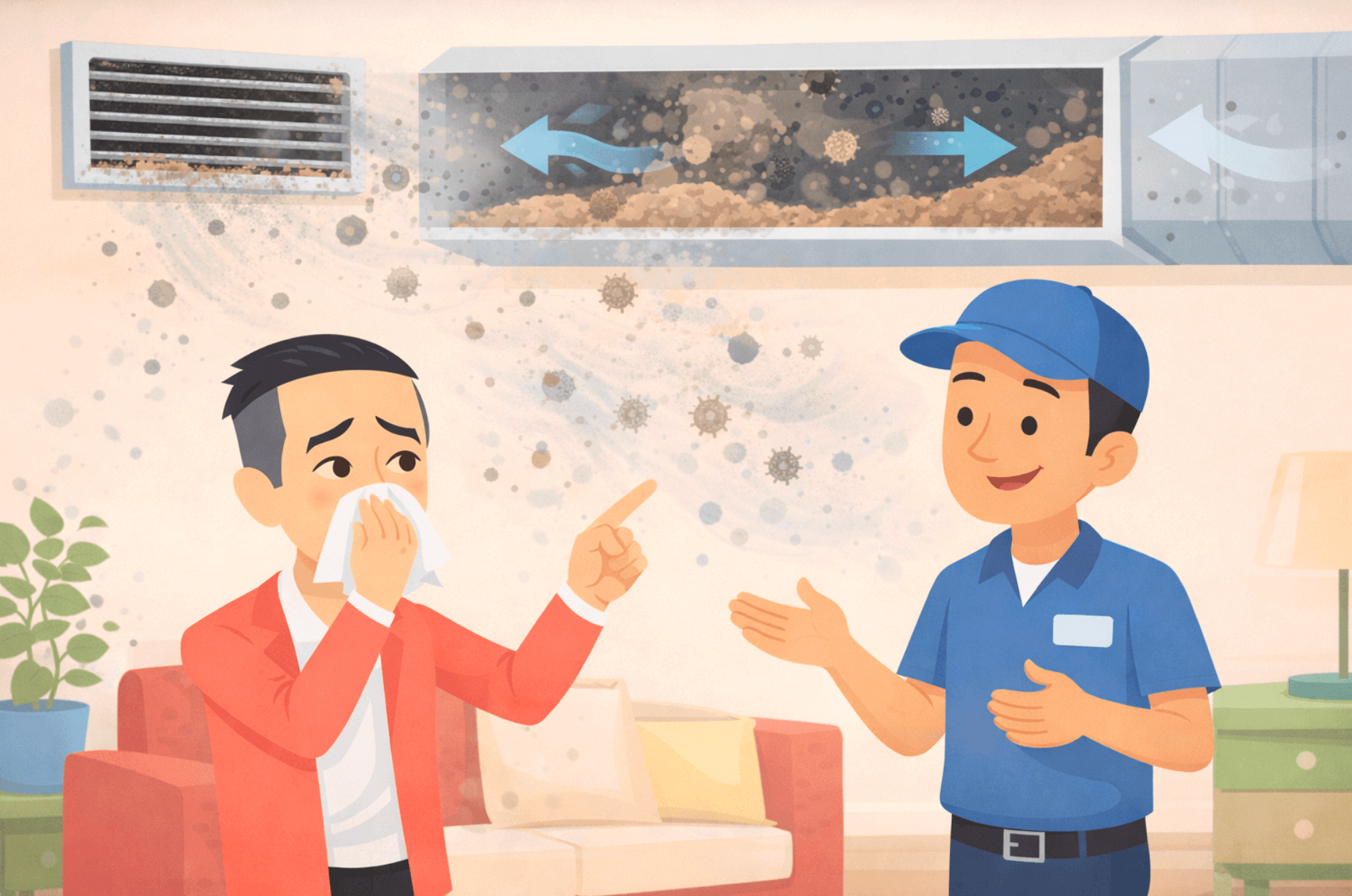

Forget vague guidelines. Here are the concrete triggers we see on jobs every week.
Visible Mold Growth
You see it inside the ducts or on HVAC components. Not just surface mold on a register—that’s a quick wipe. We’re talking growth inside the system itself.
NYC factor: High-rise humidity, older buildings with poor ventilation, steam heat systems that create condensation. Mold can establish within 24–48 hours of moisture exposure, per EPA guidelines. Once it’s colonized your ductwork, cleaning isn’t optional.
Rodent or Insect Infestation
Droppings. Nesting materials. Dead insects. If it’s in your ducts, it’s circulating through your home every time the system kicks on.
NYC factor: Rodent issues are endemic in older buildings. We’ve pulled things out of ductwork at 3 a.m. that would make your skin crawl. If you’ve had pest control visit, your ducts need attention too.
Heavy Debris or Dust Buildup
Ducts visibly clogged. Dust blowing from vents when the system starts up. Coating on interior duct surfaces thick enough to see.
NYC factor: Construction dust, urban particulates, decades of accumulated debris in pre-war systems. The average six-room house collects 40 pounds of dust annually in its ducts, per NADCA research. NYC apartments? Often worse.
Post-Renovation or Construction
Drywall dust. Sawdust. Bits of insulation. Even if your contractor “cleaned up,” trust us—it’s in your ducts. Every renovation we’ve followed up on has debris in the system. Every single one.
This is non-negotiable. New paint, new cabinets, new floors—your HVAC was running the whole time, pulling that dust right into the ductwork.
Water Damage or Flooding
Any moisture intrusion into the duct system. Doesn’t matter how it happened. Leaky roof, burst pipe, AC condensate backup. Wet ducts become moldy ducts within 24–48 hours if not dried properly.
When Duct Cleaning Probably ISN’T Necessary
We lose money telling you this. But it’s the truth.
Skip duct cleaning if:
- Your system is under 5 years old with no contamination events
- No visible dust or debris at registers when you pull them off
- No musty odors when HVAC runs
- No allergy symptoms worsening when you’re home
- You just want to “freshen things up” (that’s not how this works)
What to do instead: Clean your registers yourself—soap, water, done. Change filters monthly during heavy use. Get an inspection before committing to a full cleaning. A real inspection, not a free one that’s just a sales pitch.
How to Check Your Ducts Yourself
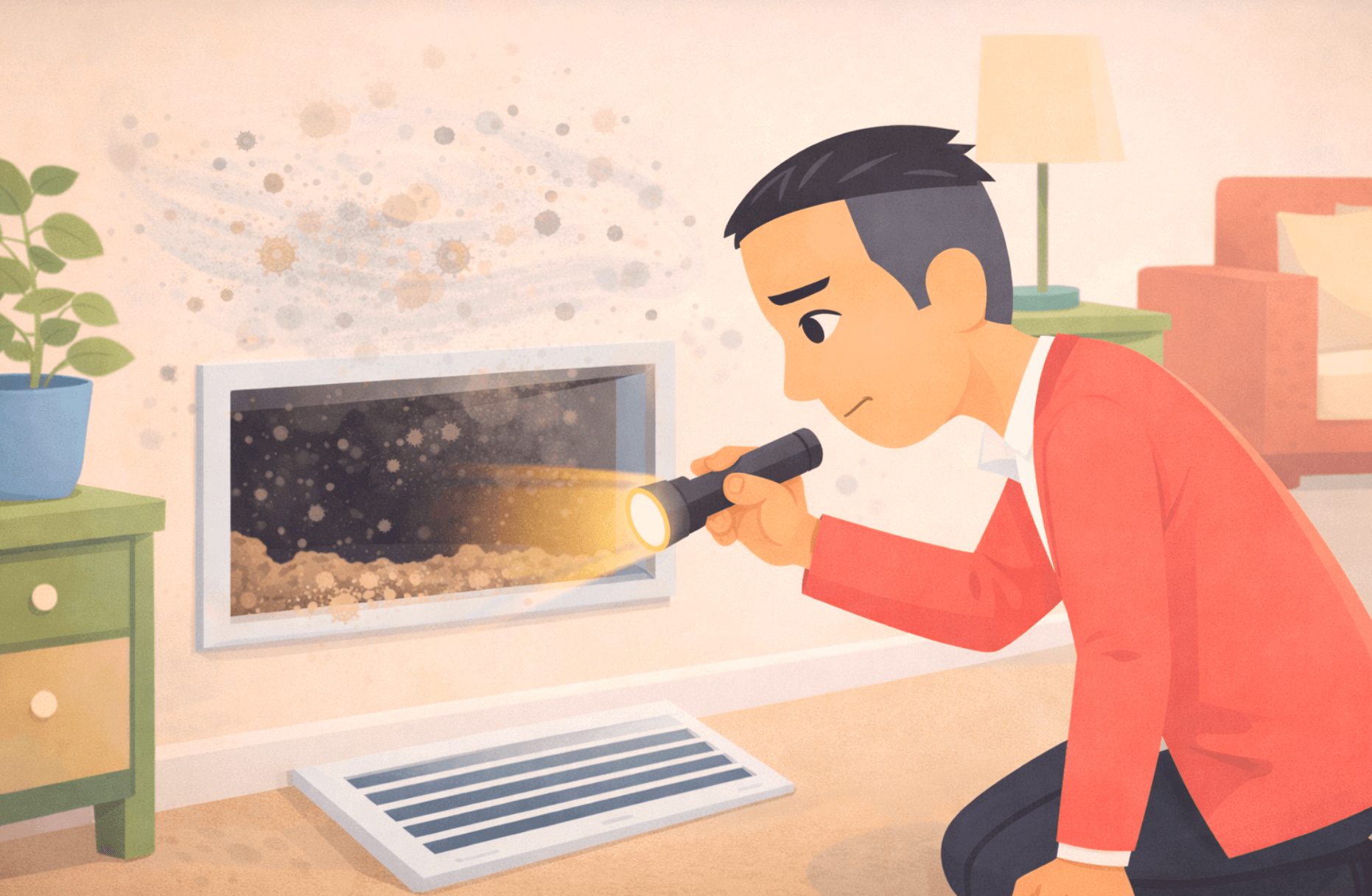

You don’t need us to tell you if something’s wrong. Here’s what to look for:
- Remove a supply register. Unscrew it, pull it off the wall.
- Shine a flashlight inside. Look at the first 6–12 inches of duct.
- Check for visible buildup. Dust coating? Debris? Discoloration?
- Do the smell test. Stick your nose in there. Musty? Stale? That’s a problem.
- Examine your filter. After 30 days of use, a heavily clogged filter suggests excessive particulate load.
What you’re looking for:
| Finding | What It Means | Action |
|---|---|---|
| Light dust coating | Normal accumulation | Monitor, change filters |
| Heavy gray/black buildup | Significant debris load | Professional inspection |
| Visible mold or discoloration | Potential contamination | Professional inspection ASAP |
| Musty odor | Moisture or mold issue | Professional inspection |
| Debris, nesting material | Pest activity | Immediate cleaning |
When DIY inspection isn’t enough: You can only see the first foot or so. A professional video inspection shows the entire system—bends, junctions, the blower compartment. If your visual check shows anything concerning, camera inspection is the next step.
NYC-Specific Factors That Change the Equation
National guidelines don’t account for what we deal with here. The variables are different.
| Factor | Why It Matters |
|---|---|
| Urban air pollution | Traffic, construction, 2.5 million cars daily. PM2.5 levels spike mornings and evenings. That particulate enters your home. |
| Building age | Pre-war buildings, 80-year-old HVAC systems, decades of accumulated debris. Original ductwork that’s never been cleaned. |
| High-rise logistics | Shared systems, harder access, humidity issues from neighbors. One unit’s problem becomes everyone’s problem. |
| Renovation frequency | Constant neighbor renovations in apartments and co-ops. Construction dust travels through shared ductwork. |
| Pest pressure | NYC rodent reality. Mice and roaches don’t respect property lines. They’re in the building infrastructure. |
The NYC Department of Health notes that fine particulate pollution contributes to roughly 2,000 excess deaths annually from lung and heart disease. What you breathe indoors matters. Your HVAC system is either filtering that air or recirculating it.
What Happens If You Need It and Don’t Do It
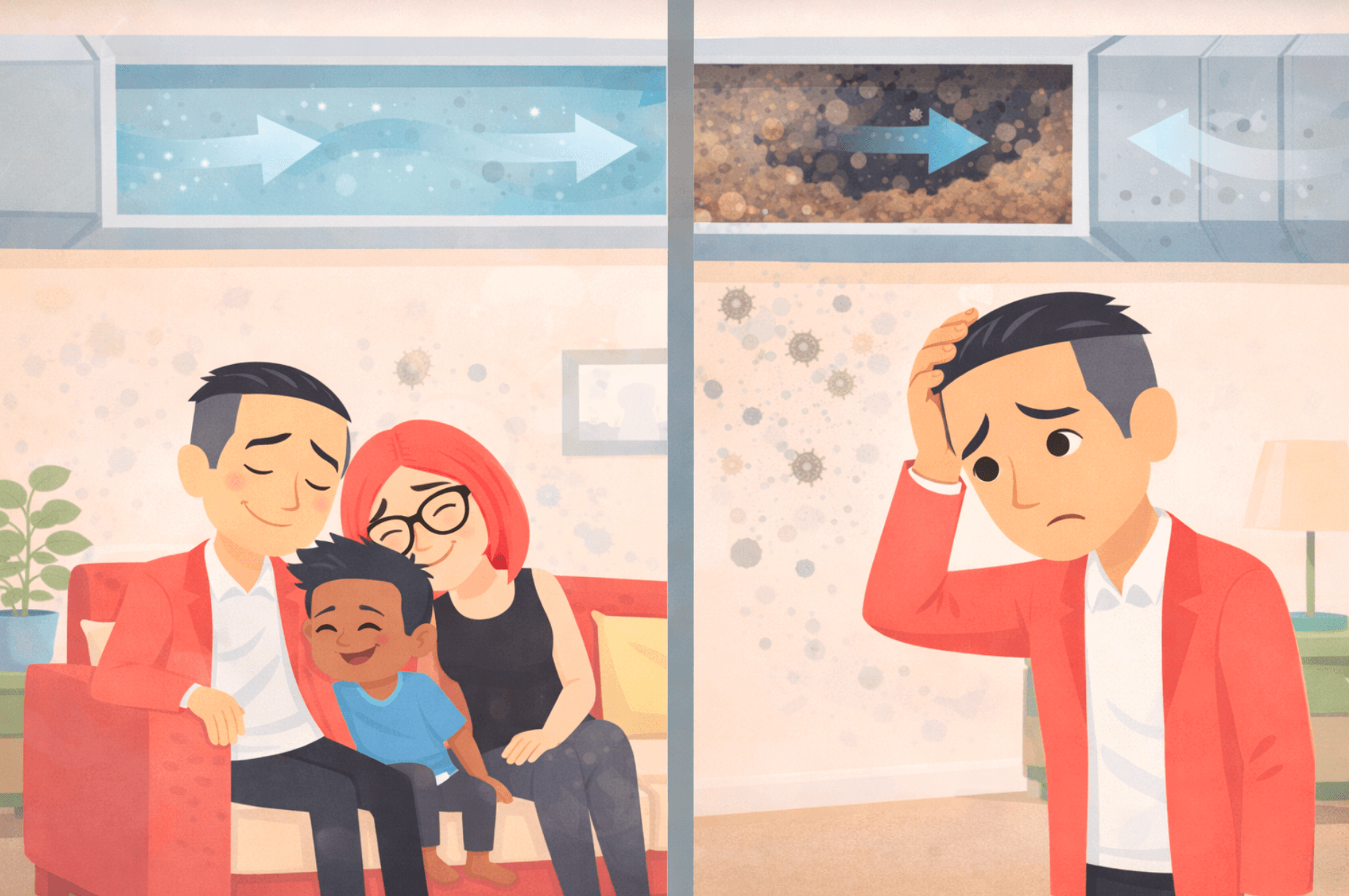

We’re not trying to scare you into a sale. But consequences are real.
Short-term:
- Contamination spreads through the entire system
- Allergen circulation continues
- Musty odors persist (air fresheners won’t fix ductwork problems)
Medium-term:
- Mold growth accelerates—it doesn’t plateau, it expands
- HVAC efficiency drops 10–15% in moderate cases, more in severe buildup
- Energy bills climb as the system works harder
Long-term:
- System lifespan shortens from strain
- Eventually you’re looking at full HVAC replacement, not just cleaning
- Health impacts compound for sensitive individuals
The 2026 NADCA study found that dirty systems force equipment to work harder, with some losing up to 40% efficiency from debris alone. Clean systems don’t just perform better—they last longer.
The Bottom Line
AC duct cleaning isn’t always necessary. The EPA’s right about that. But when it is necessary—visible contamination, mold, pests, post-renovation—don’t wait.
We’ve been doing this across Brooklyn, Manhattan, Queens, the Bronx, and Staten Island since 1998. Mike started this company because his own family had health issues that traced back to indoor air quality. We’ve seen what neglected systems look like. We’ve seen what proper cleaning accomplishes.
Not sure if you need it? Get an inspection first. A real inspection with camera documentation, not a sales pitch disguised as a free estimate. We’ll tell you what we find—including when the answer is “your ducts are fine.”
Ready to find out what’s actually in your ductwork? Call Remex USA at (929) 430-2332 for a free visual inspection. We’ll give you the straight answer.
Remex USA has been serving NYC’s indoor air quality needs since 1998. We’re locally owned, family operated, and still personally involved in every job. No corporate fluff—just honest work from people who’ve been doing this for 25+ years.